Garage Remodel Into Living Space: A Complete Guide
April 8, 2026
Your garage is probably the most underused space in your home. Most people fill it with boxes, tools, and things they forgot they owned. But that same space could become a bedroom, home office, rental apartment, or guest suite.
A garage remodel into living space is one of the smartest ways to add square footage without building an addition. It uses space you already have and costs less than most people expect.
This guide covers everything you need to know before you start, including costs, permits, steps, and timelines.
Can You Convert Your Garage Into Living Space?
Most garages can be converted. But a few things need to be checked first.
Ceiling height matters. Most building codes require at least 7 feet of clear ceiling height for a habitable room. Standard garages usually meet this, but it is worth measuring before you plan anything.
Structural condition is the next check. Look for cracks in the slab, signs of water damage, or any rot along the walls or framing. Problems found early are far cheaper to fix than problems found mid-project.
Zoning rules vary by city. Nashville requires that you confirm your property meets local zoning requirements before any conversion work begins. If your home sits in a historic district, additional approval from the Metropolitan Historic Zoning Commission may be required. Checking this first saves a lot of time.
Attached and detached garages can both be converted. Detached garages often work well as full apartments or guest suites with a separate entrance. Attached garages connect naturally to the main home and work well for bedrooms, offices, or family rooms.
Do You Need a Permit for a Garage Conversion?
Yes. In Nashville and most other cities, a garage conversion requires permits. Skipping this step creates legal problems when you sell your home and can result in costly fines.
You will typically need:
- A building permit for the structural changes
- An electrical permit for new wiring
- A plumbing permit if you are adding a bathroom or kitchen
- An HVAC permit for heating and cooling installation
Your contractor handles the permit applications in most cases. But you should know what is required before work starts. For more on what to expect during this process, read our guide on what to expect during a Nashville home remodel.
Cost to Convert a Garage Into Living Space
Cost depends on how much you are doing. Here are realistic ranges based on the scope of work:
Basic Room Conversion: $8,000 to $20,000 This covers insulation, drywall, flooring, and basic lighting. No plumbing. Good for a home office, gym, playroom, or simple bedroom.
Mid-Range Conversion: $20,000 to $40,000 This adds HVAC installation, new windows, and electrical upgrades. Suitable for a proper bedroom, studio, or home workspace with heating and cooling.
Full Apartment Conversion: $40,000 to $75,000 and up This includes a bathroom, kitchenette or kitchen, full plumbing, separate entrance, and all finishes. This is the most expensive option but also gives the highest return, especially if you plan to rent the space.
Permit costs in Nashville typically run $1,000 to $1,500 on top of construction costs. Labor rates, material choices, and how much existing work needs to be corrected all affect the final number.
If you are considering a complete home renovation alongside a garage conversion, bundling the work with one contractor often reduces overall costs.
Step-by-Step Garage Conversion Process
Step 1: Plan the Layout Decide what the space will be used for. A bedroom has different requirements than a rental apartment. Settle on the layout before anything else.
Step 2: Get Your Permits Submit your plans to the city and wait for approval before any work begins. A contractor with local experience speeds this process up significantly. Our guide on questions to ask general contractors in Nashville helps you hire the right person for this.
Step 3: Replace the Garage Door The garage door opening gets framed in with a standard exterior wall. This usually includes a window for natural light and an entry door. This step improves insulation and makes the space feel like a real room instead of a converted garage.
Step 4: Level the Floor Garage floors slope toward the driveway for drainage. That slope needs to be corrected before you add flooring. The fix is wood framing laid over the concrete slab, followed by a subfloor. This also creates space to run insulation underneath.
Step 5: Install Insulation Walls, ceiling, and floor all need insulation. Without it, the space is too hot in summer and too cold in winter. Nashville’s climate makes this step non-negotiable.
Step 6: Run Electrical Wiring Add outlets, switches, and light fixtures. Most garages have minimal electrical capacity, so upgrades are almost always needed. An electrician handles this as part of the permitted work.
Step 7: Install HVAC A mini-split system is the most common choice for garage conversions. It is easy to install, energy efficient, and does not require ductwork. It handles both heating and cooling in one unit. If the converted space connects directly to your main home, extending existing ductwork is another option.
Step 8: Hang Drywall and Install Flooring Once mechanical work is done and inspected, drywall goes up and flooring goes in. For flooring options that work well in converted spaces, luxury vinyl and engineered hardwood both perform well over subfloor systems.
Step 9: Final Inspection A city inspector signs off on the completed work before anyone can occupy the space. This is a required step, not optional.
Floor Leveling and Moisture Protection
Concrete garage slabs absorb moisture. Left untreated, that moisture works its way up through your flooring and causes damage over time.
Before the subfloor goes in, a vapor barrier gets laid directly on the concrete. This blocks moisture from rising. Rigid foam insulation goes on top of the vapor barrier. Then the wood subfloor sits on top of that.
This system levels the floor, insulates from below, and blocks moisture. Skipping any part of it leads to warped flooring and mold problems later.

How Long Does a Garage Conversion Take?
Realistic timelines based on project size:
- Basic room conversion: 2 to 4 weeks
- Standard conversion with HVAC and electrical: 4 to 8 weeks
- Full apartment with bathroom and kitchen: 8 to 12 weeks
Permit approval adds time before construction starts. In Nashville, budget two to four weeks for permit processing on top of the build timeline.
Does a Garage Conversion Add Value to Your Home?
Yes, in most cases. A well-done conversion typically returns 60% to 80% of its cost in added home value. A full apartment conversion with a separate entrance returns even more, especially if it generates rental income.
One thing to consider: removing garage parking can reduce appeal for some buyers. If off-street parking matters in your neighborhood, a carport or extended driveway helps offset that concern.
For homeowners in Nashville who need more space without the cost of a full addition, a garage conversion offers strong value. If you are still comparing options, our page on home additions and the guide on building an addition on a house in Nashville are worth reading alongside this one.
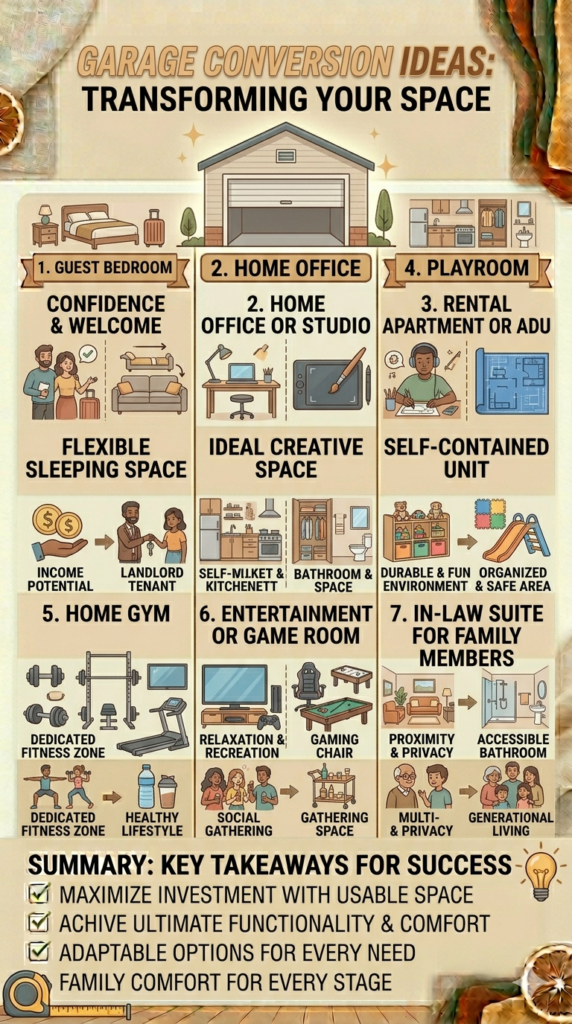
Garage Conversion Ideas
Not sure what to do with the space? Here are the most popular options:
- Guest bedroom or suite
- Home office or studio
- Rental apartment or ADU
- Playroom or kids’ zone
- Home gym
- Entertainment or game room
- In-law suite for family members
The right choice depends on your family’s needs and your long-term plans for the property.
DIY vs Hiring a Contractor
Simple finishing work like painting or installing trim is manageable as a DIY project. But most of a garage conversion is not.
Permitted electrical, plumbing, and HVAC work requires licensed trades. Structural changes to the floor and door opening require skill and the right tools. Getting any of these wrong creates safety risks and permit failures that cost more to fix than hiring a professional would have in the first place.
A licensed contractor handles permits, coordinates trades, and gets the work done to code. For a project of this size, that is worth it.
If you are ready to move forward, contact Barnes Talero Construction for a free estimate. We handle garage conversions, kitchen remodeling, bathroom remodeling, and full home renovations across Nashville.
Frequently Asked Questions
Do you need a permit to convert a garage in Nashville?
Yes. You need a building permit at minimum. Electrical, plumbing, and HVAC work each require their own permits.
How much does a garage conversion cost?
Basic conversions start at $8,000 to $20,000. Full apartment conversions run $40,000 to $75,000 and up.
How long does a garage conversion take?
Two to four weeks for basic work. Eight to twelve weeks for a full apartment with bathroom and kitchen.
Does converting a garage add value?
Yes. Most conversions return 60% to 80% of the cost in added home value. Rental apartments often return more.
Do I need to raise the garage floor?
Yes. Garage floors slope toward the driveway. A subfloor system levels the surface and adds insulation and moisture protection underneath.
Can I convert a garage without removing the door?
You can keep a garage door if it is insulated and sealed, but framing in a proper wall with windows and an entry door performs better for insulation, security, and appearance.